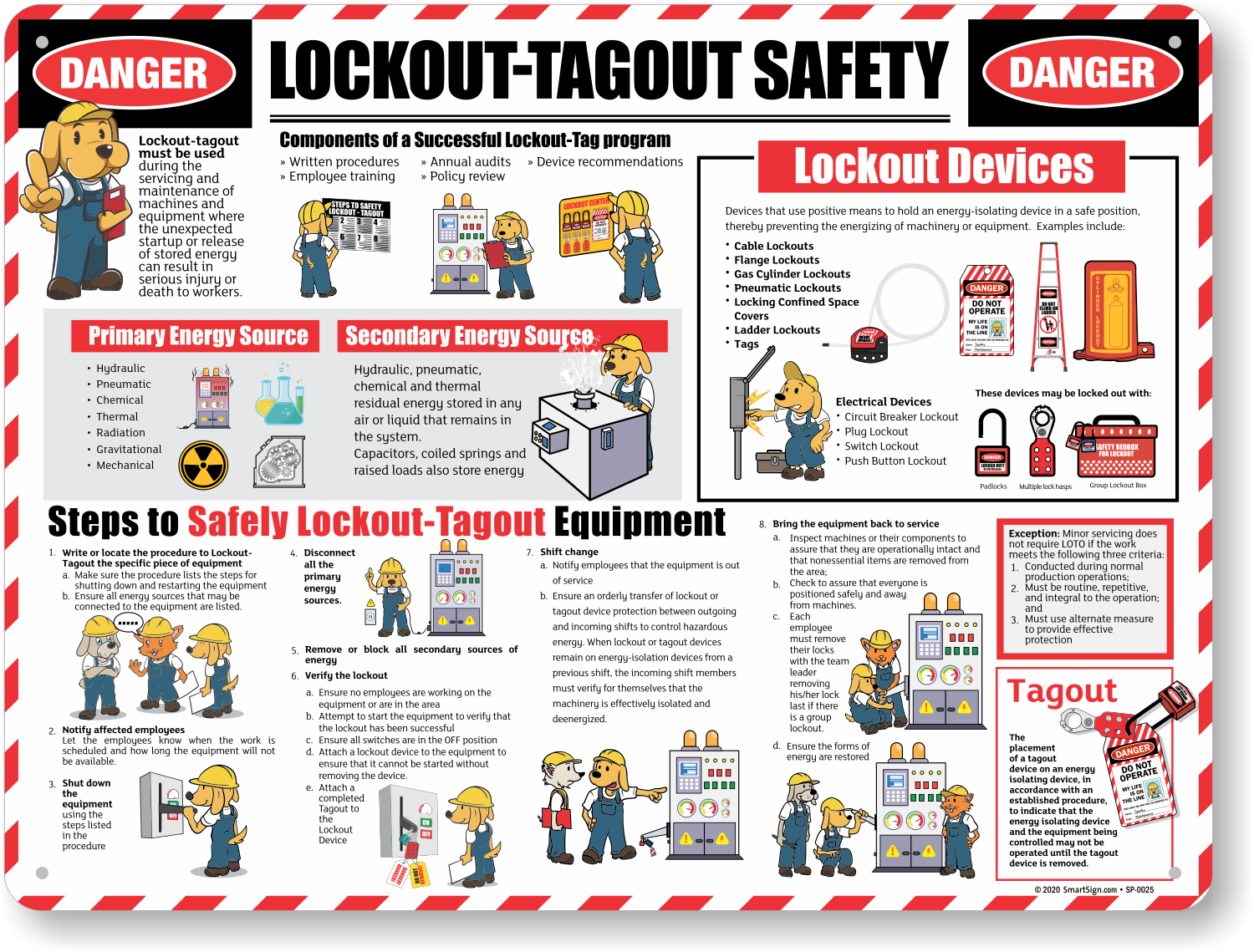
Most workplace injuries involving machinery happen not during operation—but during maintenance. A split-second oversight, a valve left open, an unsecured power source—these are the cracks where serious harm slips through. Lock out tag out (LOTO) guidelines exist to eliminate those gaps. They aren’t just policy—they’re procedural armor.
When done right, LOTO stops hazardous energy before it can endanger lives. When done wrong, it creates false confidence. This guide cuts through the noise to deliver clear, actionable lock out tag out guidelines that align with OSHA standards and real-world industrial demands.
Why Lock Out Tag Out Procedures Matter
Every year, hundreds of workers are injured or killed during service or maintenance of machines that unexpectedly start up or release stored energy. These incidents are preventable. The core principle of LOTO is simple: isolate all energy sources and ensure they stay off until maintenance is complete.
Energy sources aren’t just electrical. They include:
- Hydraulic and pneumatic systems
- Mechanical potential (springs, suspended parts)
- Chemical, thermal, or gravitational energy
Imagine a technician clearing a jam in a conveyor system. If someone restarts the line remotely—or if residual pressure in a hydraulic arm releases—the consequences can be catastrophic. LOTO ensures no one can energize a machine while someone is inside or near it.
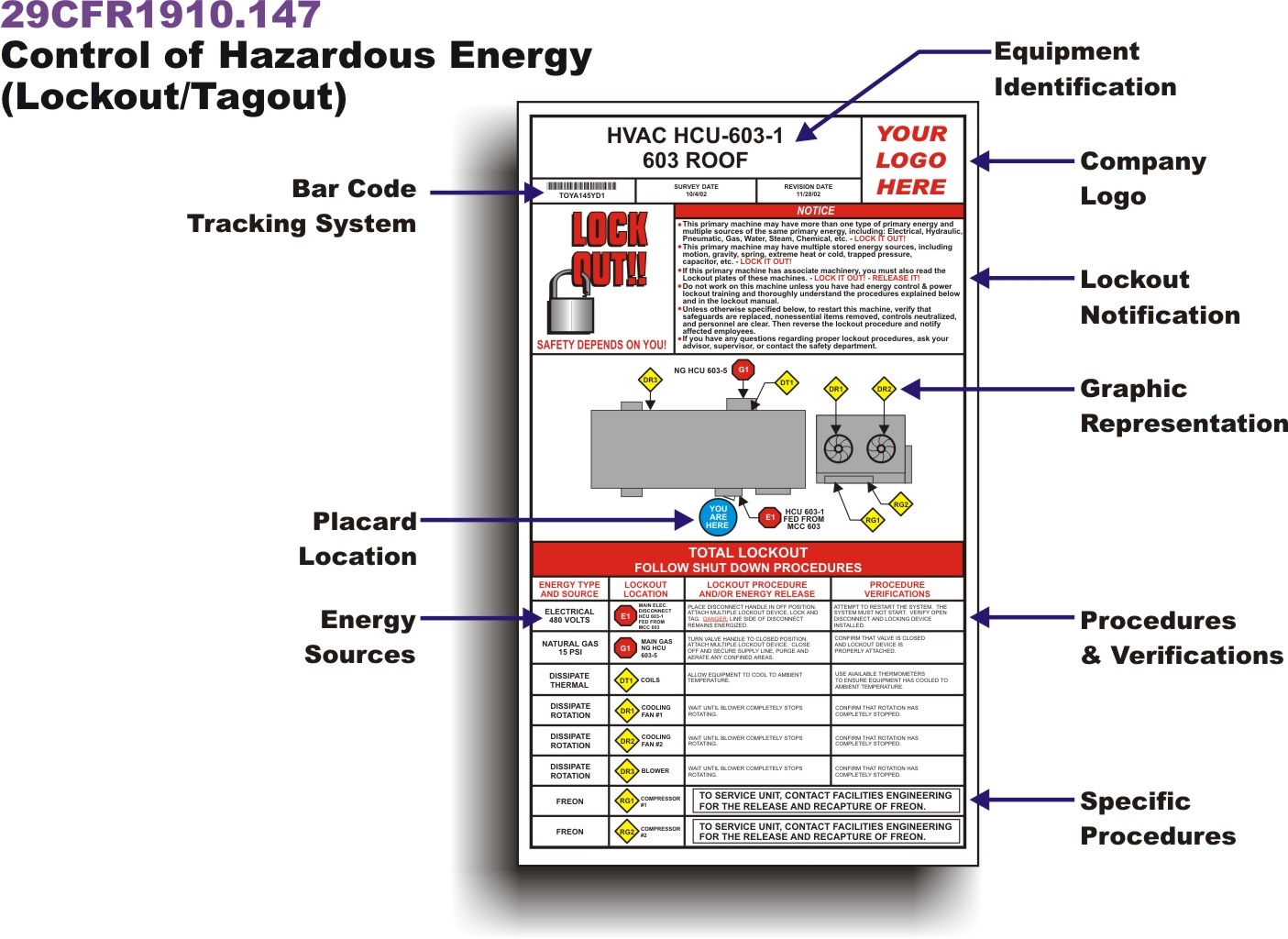
OSHA’s standard 29 CFR 1910.147 sets the baseline, but compliance isn’t just about checking boxes. It’s about building a culture where every worker understands the "why" behind the lock.
The 6-Step LOTO Process: A Practical Framework
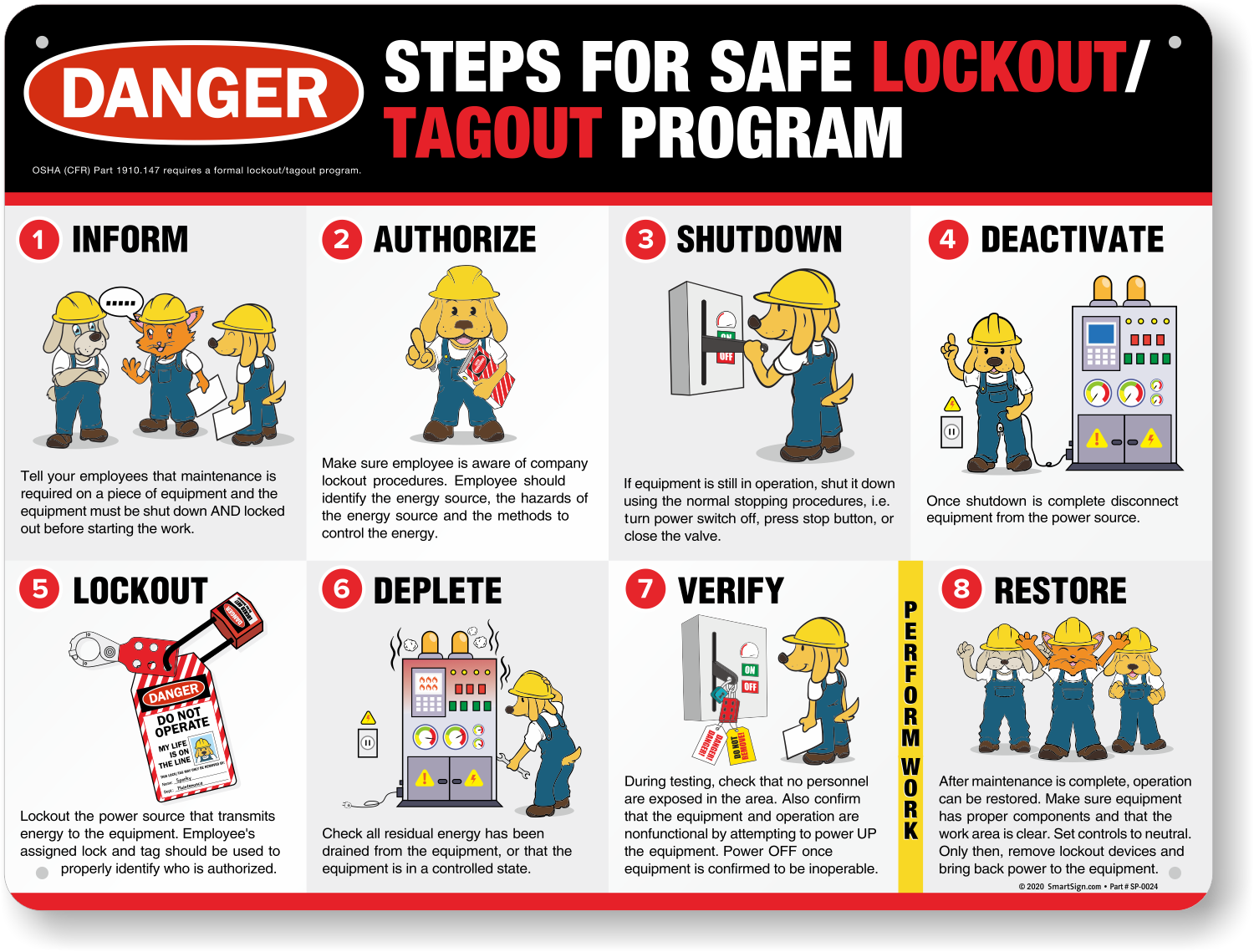
Following a standardized sequence reduces errors and increases consistency across teams. Here’s the proven six-step LOTO process:
#### 1. Preparation Before any work begins, the authorized employee must identify all energy sources powering the equipment. This includes reviewing equipment schematics and consulting maintenance logs. Example: A press machine may draw power from electricity, pneumatics, and hydraulic lines—all must be mapped.
#### 2. Notification Alert all affected employees that maintenance is about to begin. This ensures no one attempts to use the machine during servicing. Best practice: Use visual signals like warning cones or signage in addition to verbal alerts.
#### 3. Machine Shutdown Shut down the equipment using normal stopping procedures. Never assume shutdown equals safety.
#### 4. Isolation Physically disconnect all energy sources using disconnects, valves, or blocks. This is where many failures occur—misidentifying a secondary energy source or skipping a line.
#### 5. Application of Locks and Tags Each authorized worker applies their personal lock and tag to every energy-isolating device. - Locks physically prevent re-energizing. - Tags communicate why the lock exists and who applied it.
Multiple workers = multiple locks. No shared locks. No master keys (unless under strict control protocols).
#### 6. Verification After locking, verify zero energy state by attempting to start the machine (via normal controls) and testing for residual energy. Critical step: If the machine operates even slightly, the LOTO failed.
Only after verification should work begin.
Common LOTO Mistakes That Put Workers at Risk
Even experienced teams make errors. These common mistakes undermine LOTO effectiveness:
- Using tags without locks – Tags alone don’t prevent activation. OSHA allows tag-only use only in rare, justified cases (e.g., when a disconnect can’t accept a lock).
- Group LOTO confusion – When multiple people are involved, a primary authorized employee must coordinate locks, but each individual still applies their own lock.
- Skipping verification – Assuming the lock worked without testing is a top cause of incidents.
- Inadequate training – Affected employees (those who operate but don’t service machines) still need basic LOTO awareness.
- Poor lock storage – Leaving locks in desks or shared bins leads to misuse or loss.
One plant reported a near-miss when a technician re-energized a machine because the last worker had removed their lock but forgot to remove the tag. Clear procedures and daily audits prevent these lapses.
LOTO Devices: Choosing the Right Tools
Not all locks and tags are equal. The right hardware ensures durability, visibility, and tamper resistance.
| Device Type | Purpose | Best Use Case |
|---|---|---|
| Padlock ( keyed or combination ) | Personal lockout for energy isolators | Standard electrical disconnects |
| Valve Lockout | Blocks control of gas, steam, fluid lines | Piping systems, hydraulic units |
| Circuit Breaker Lock | Secures breaker in OFF position | Electrical panels, motor control centers |
| Plug Lockout | Covers electrical plugs | Portable equipment, temporary setups |
| Hasp and Multiple Lock Carrier | Enables group lockout | Machines with multiple isolation points |
Tags should include: - Employee name - Date and time of lock application - Reason for lockout - Contact information
Use bold colors (red, yellow, orange) and weather-resistant materials in harsh environments.
When Group Lockout Is Necessary
In complex maintenance jobs, multiple technicians may work on one machine. OSHA permits group lockout under strict conditions.
The protocol requires: - A single authorized employee to oversee the process - Each worker applies their personal lock to a central hasp or lockbox - The primary lock controls energy re-energization - All locks remain until every worker confirms completion
Real example: During a boiler overhaul, five technicians worked on different subsystems. The lead technician used a lockout station where each member placed their lock. Only when all five removed their locks could the boiler be restarted—ensuring no one was left inside.
Never allow one person to remove another’s lock. Exceptions require documented procedures, including supervision and direct contact with the lock owner.
LOTO in High-Risk Industries: Real Applications
Different industries face unique energy hazards. LOTO must adapt accordingly.
#### Manufacturing Conveyor systems, robotic arms, and stamping presses store kinetic and electrical energy. A common failure point is failing to bleed air from pneumatic lines before lockout.
Fix: Include bleed valve verification in the checklist.
#### Oil and Gas Valves controlling flammable substances require double block and bleed methods. Lockout must prevent both upstream and downstream flow.
Tip: Use color-coded locks by department—maintenance (red), electrical (blue), process control (green).
#### Construction Mobile equipment like cranes or excavators may not have standard disconnects. Here, LOTO includes removing ignition keys and blocking movement physically.
Best practice: Treat battery disconnection as a primary control measure.
#### Utilities High-voltage switchgear demands electrical-specific LOTO, often aligned with NFPA 70E. Locks must be rated for high-risk electrical environments.
Mistake to avoid: Assuming de-energized circuits stay safe—always test before touch.
Training and Compliance: Beyond the Checklist
A LOTO procedure is only as strong as the people executing it. OSHA requires two types of training:
- Authorized employees – Those who perform maintenance and apply locks. They must know energy sources, isolation methods, and verification steps.
- Affected employees – Operators who use machines but don’t service them. They must recognize LOTO procedures and understand not to bypass locks.
Annual retraining is mandatory. But effective programs go further: - Run surprise drills (e.g., simulate a startup attempt on a locked machine) - Audit 10% of LOTO applications monthly - Require documentation for every lockout—especially in shift handovers
One facility reduced LOTO violations by 70% after introducing digital logs with photo verification via tablets on the shop floor.
Developing a Site-Specific LOTO Program
Generic procedures fail because machines differ. OSHA requires written energy control programs tailored to each facility.
Your LOTO plan must include: - Machine-specific procedures (one per equipment type) - List of energy sources and isolation points - Roles and responsibilities - Lockout device inventory - Retraining schedule - Periodic inspections (at least annually)
Inspections must be performed by someone not involved in the procedure. They observe a live lockout and document gaps.
Example: An annual audit at a packaging plant revealed that maintenance crews were skipping hydraulic pressure release because the manual didn’t specify bleeder valve locations. The fix? Update the procedure with diagrams and valve coordinates.
Closing: Make LOTO Non-Negotiable
Lock out tag out guidelines aren’t red tape—they’re survival tactics. The difference between a routine maintenance job and a life-altering accident often comes down to one missed step.
Start by auditing your current process. Are locks personal? Are tags informative? Is verification mandatory? Train relentlessly. Empower employees to stop work if LOTO isn’t followed.
Compliance isn’t the goal—zero injuries is. Build LOTO into your operational DNA, and you won’t just meet regulations. You’ll protect people.
#### Frequently Asked Questions
What is the main purpose of lock out tag out? The primary purpose of LOTO is to prevent the unexpected startup or release of hazardous energy during maintenance, ensuring worker safety.
Who is responsible for applying locks and tags? Only authorized employees—those trained and designated to perform servicing—can apply locks and tags.
Can tags be used without locks? Rarely. OSHA allows tag-only use only if the equipment design prevents effective lock use, and additional safety measures are in place.
How often should LOTO procedures be reviewed? Written procedures must be inspected at least annually to ensure accuracy and compliance.
What should a LOTO tag include? A tag must display the employee’s name, date, time, and reason for the lockout.
Do all employees need LOTO training? Affected employees (operators) need awareness training; only authorized employees require full procedural training.
Can someone else remove my lock? No, only the employee who applied the lock may remove it, unless an emergency removal procedure is followed with strict documentation.
FAQ
What should you look for in Lock Out Tag Out Guidelines Every Worker Should Know? Focus on relevance, practical value, and how well the solution matches real user intent.
Is Lock Out Tag Out Guidelines Every Worker Should Know suitable for beginners? That depends on the workflow, but a clear step-by-step approach usually makes it easier to start.
How do you compare options around Lock Out Tag Out Guidelines Every Worker Should Know? Compare features, trust signals, limitations, pricing, and ease of implementation.
What mistakes should you avoid? Avoid generic choices, weak validation, and decisions based only on marketing claims.
What is the next best step? Shortlist the most relevant options, validate them quickly, and refine from real-world results.